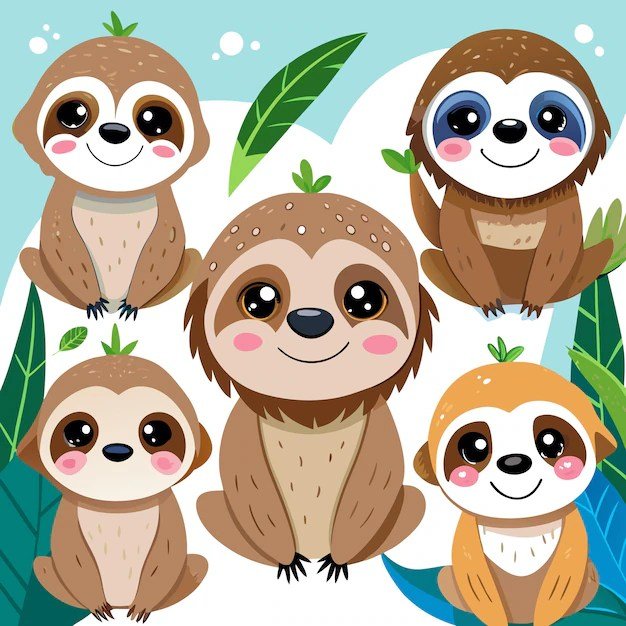
The world is speeding up, relentlessly, demanding more, faster, always. So, it's a delightful paradox, isn't it, that in this frenetic rush, we've collectively fallen head over heels for one of nature's slowest, most deliberate creatures? We're talking about the sloth, of course, and specifically, the remarkable rise of Iconic Cartoon Sloths & Their Stories Of Pop Culture's Slow Takeover. From sleepy-eyed zen masters to accidental adventurers, these charmingly unhurried characters have carved out an undeniable niche, not just in animation, but across the vast landscape of digital art and popular merchandise.
This isn't just a fleeting trend; it's a full-blown cultural embrace. These cuddly, often comical, renditions of sloths have become ubiquitous, appearing in an astonishing array of forms that speak to our subconscious desire for calm, comfort, and perhaps, a reminder to just slow down a little.
At a Glance: Why Cartoon Sloths Are Everywhere
- Relatability Reigns: Their perceived laziness and calm demeanor resonate with our busy lives, offering a sense of charming escapism.
- Visual Versatility: Available in thousands of styles—from kawaii to hand-drawn—they adapt to almost any design brief.
- Emotional Range: Despite their slow nature, cartoon sloths convey joy, sleepiness, motivation, and even a touch of whimsical mischief.
- Design Goldmine: Used across everything from nursery prints to corporate branding, thanks to their universal appeal.
- Cultural Iconography: While specific named characters might be few, the image of the cartoon sloth has become a collective icon.
Why the Sloth, Why Now? The Unlikely Rise of a Slow Icon
Think about it: in a world obsessed with speed, efficiency, and instant gratification, the sloth is the ultimate anti-hero. They move at their own pace, prioritize rest, and seem utterly unbothered by the rat race. This inherent contradiction is precisely what makes them so appealing in a cartoon context. They offer a comforting counter-narrative, a gentle reminder that it's okay to take a moment, to hang around, to simply be.
Real-world sloths are fascinating creatures, known for their deliberate movements, their tree-dwelling habits, and that perpetually serene smile. When translated into cartoon form, these traits become amplified and distilled into pure, unadulterated charm. Artists often exaggerate their large, expressive eyes, their slow, deliberate limbs, and that iconic sleepy grin, making them irresistible. This isn't just about cuteness; it's about a character archetype that embodies a certain tranquil wisdom, a rejection of frantic modern life that speaks volumes without saying a word.
The Anatomy of a Cartoon Sloth: From Doodle to Digital Domain
What makes a cartoon sloth so endlessly adaptable? It's the sheer breadth of artistic interpretation available. If you've ever delved into the world of digital assets, you'll know that the variety is staggering. We're talking about a treasure trove of design elements—over 8,000 royalty-free cartoon sloth illustrations and vector graphics—each offering a unique take on our tree-hugging friends.
You'll find these characters depicted in every conceivable state:
- Classic Comfort: Hanging lazily from tree branches, sitting contentedly, or hugging a cozy pillow.
- Everyday Antics: Sipping coffee, cycling (at their own pace, of course), climbing, or simply enjoying a good book.
- Human-like Humor: Meditating peacefully, listening to music with headphones, striking human-like poses, or even donning a Santa Claus costume for the holidays.
This remarkable range allows cartoon sloths to fit into nearly any narrative or design concept. The illustrations frequently feature adorable baby sloths and heartwarming family units (mother and baby), tugging at our heartstrings with their portrayal of innocence and connection. The prevailing themes? Often lazy, sleepy, or just plain joyful—qualities we often secretly wish we could embrace more often.
Artistic Styles: A Sloth for Every Aesthetic
The beauty of the cartoon sloth lies in its stylistic versatility. Designers and illustrators have explored a vast spectrum of artistic approaches:
- Hand-Drawn Charm: Offering a personal, organic feel.
- Vector & Clip Art: Clean, scalable, and perfect for digital applications.
- Doodle & Kawaii: Emphasizing cuteness, simplicity, and playful lines, often with oversized heads and expressive features.
- Flat Design: Modern, minimalist, and visually striking.
These styles are available in both monochrome for sophisticated simplicity and vibrant, colorful variations that pop off the page. Many of these digital assets come as seamless repeating patterns, perfect for textiles or backgrounds, and are often delivered as Illustrator 10 vector files. This means colors are customizable, and layers are clearly labeled, giving creators immense freedom to tweak and tailor their sloth to perfection. This level of adaptability makes the cartoon sloth an artist's dream, allowing for consistent branding or unique one-off projects.
More Than Just a Pretty (Slow) Face: Where Cartoon Sloths Thrive
The widespread availability and flexible nature of cartoon sloth imagery mean they pop up in an incredible variety of places. They're not just cute faces; they're versatile design elements with immense practical applications.
Consider their presence in design projects:
- Digital Canvas: As eye-catching backgrounds for websites or engaging social media content.
- Print & Apparel: Adorning posters, greeting cards (for birthdays, motivation, or sleepy pajama parties), sticker kits, and becoming beloved motifs on kids' t-shirts and other textiles.
- Nursery & Decor: Their gentle, calming nature makes them perfect for nursery designs and children's room decorations.
- Events & Branding: Adding a touch of whimsy to summer party decorations, logos, flyers, and even casual business cards.
These sloths are almost always situated within lush, inviting environments that reinforce their natural habitat. You'll commonly see them in rainforest or forest settings, surrounded by vibrant elements like green leaves, delicate ferns, exotic tropical plants, bright flowers, towering palm trees, cheerful rainbows, and even a refreshing cocktail or two (presumably non-alcoholic, or at least very slow-sipping).
Sometimes, our slow heroes aren't alone. They share their illustrated world with a diverse cast of other fascinating creatures, often those also associated with unique or captivating characteristics. While the list of potential companions is long—from pangolins to pandas, meerkats to monkeys—their presence often adds another layer of charm and context, creating a mini ecosystem where the sloth reigns supreme in its unhurried domain. This collaborative imagery further broadens the appeal, allowing designers to craft richer, more complex scenes around the central sloth figure.
The "Slow Takeover": How Sloths Infiltrated Our Screens and Stores
The title of this article isn't just catchy; it's a profound observation. The "slow takeover" isn't about a sudden, explosive rise to fame, but rather a gradual, pervasive infiltration of the cultural consciousness. Unlike characters that launch with a massive media blitz, the cartoon sloth's iconic status has been built brick by brick, pixel by pixel, across thousands of independent designs and uses.
While there might not be a single, universally recognized "Mickey Mouse of sloths" (though a few characters come close, like Flash from Zootopia, who epitomizes the trope), the archetype of the cartoon sloth has become undeniably iconic. It's the sheer volume and diversity of these 8,000+ available illustrations that have cemented their place. When an image is so widely reproduced, so readily available, and so frequently consumed across diverse platforms, it transcends individual instances and becomes a cultural shorthand.
Think about it: when you see a cartoon sloth, you immediately conjure a set of associations—calm, slow, cute, sometimes a bit goofy. This collective understanding is what truly makes them iconic. They've become a go-to symbol for everything from self-care and mindfulness to simply enjoying life's unhurried moments. They're a staple in meme culture, adorning everything from coffee mugs to phone cases, and becoming a beloved motif in children's books and animated shorts.
If you're looking to dive deeper into understanding this widespread phenomenon and how these delightful creatures have become such a visual staple, you'll find a wealth of information in articles like Your guide to cartoon sloths. They truly capture the essence of how a seemingly niche animal has become a mainstream darling. This ubiquity, this quiet omnipresence, is the "slow takeover" in action. It's not about a character starring in the next blockbuster; it's about the very image of the cartoon sloth becoming a comforting, recognizable presence in our everyday digital and physical lives.
Crafting Your Own Sloth Story: Tips for Designers & Creators
For designers, artists, or anyone looking to infuse their projects with a dose of calm charm, leveraging cartoon sloth illustrations offers a fantastic creative avenue. The resources available are designed for flexibility and ease of use, making them incredibly powerful tools for storytelling and branding.
Here’s how to make the most of these delightful characters:
Harnessing the Power of Vector Graphics
Many of these illustrations are provided as Illustrator 10 vector files. This is a game-changer because:
- Scalability: Vector graphics can be infinitely scaled up or down without any loss of quality, making them perfect for anything from a tiny app icon to a massive billboard.
- Customization: Colors are fully customizable. You can adapt a sloth's fur, the leaves it hangs from, or the rainbow in the background to perfectly match your brand palette or project theme.
- Layer Organization: Clearly labeled layers mean you can easily isolate elements, remove backgrounds, or combine different sloth characters with new settings. Want to swap a coffee cup for a book? With organized layers, it’s a breeze.
Choosing Your Sloth's Vibe
The artistic style you select will dramatically influence the message your sloth conveys:
- Kawaii: If you're aiming for extreme cuteness, a sense of childlike wonder, or a friendly, approachable vibe (think nursery decor, children's books, or sweet greeting cards), kawaii is your go-to.
- Doodle: For a more whimsical, informal, or playful feel, doodle-style sloths bring an artistic, handcrafted touch. Great for quirky merchandise or personal blogs.
- Flat Design: If your project requires a modern, clean, and minimalist aesthetic, flat-design sloths offer crisp lines and a contemporary appeal, suitable for apps, websites, or sleek branding.
The Magic of Seamless Patterns
The availability of seamless repeating patterns (both vertically and horizontally) is a boon for textile design, wallpaper, or digital backgrounds. These patterns allow you to create immersive, continuous visual experiences without worrying about awkward seams or breaks. Imagine a cozy blanket covered in sleeping sloths or a vibrant phone wallpaper featuring a never-ending sloth parade through a tropical forest.
Tailoring to Your Audience and Message
Consider who you're trying to reach and what you want to communicate:
- For Kids: Focus on bright colors, playful poses (cycling sloths!), and simple, joyful expressions. Baby sloths and family units are particularly effective here.
- For Motivation/Wellbeing: A meditating sloth, one enjoying a cup of tea, or a sloth with an encouraging quote can be perfect for greeting cards, mindfulness apps, or social media posts promoting self-care.
- For Humor: A sloth dressed as Santa or struggling charmingly with a mundane task can bring a smile and a lighthearted touch.
By thoughtfully selecting the style, pose, and accompanying elements, you can craft a cartoon sloth narrative that perfectly resonates with your audience and achieves your project goals.
Beyond the Leaves: Semantic Relatives and Sloth Sidekicks
The world of cartoon sloths isn't just about the sloth itself; it's about the entire ecosystem of cuteness and calm that surrounds them. The ground truth research highlights a fascinating array of other animals that may appear alongside sloths. This isn't just random; it's a strategic choice that expands the narrative possibilities and broadens the appeal of any design.
Think about the companions mentioned: pangolins, ring-tailed lemurs, lori lemurs, Komodo monitor lizards, armadillos, meerkats, tarsiers, toucans, parrots, flamingos, pandas, llamas, foxes, koalas, cats, dogs, raccoons, and rabbits. This diverse cast serves several purposes:
- Establishing Habitat: Many of these animals (toucans, parrots, lemurs) reinforce the tropical, forest, or jungle setting, making the sloth's environment feel more alive and authentic, even in cartoon form.
- Contrasting Personalities: Pairing a slow sloth with a quick meerkat or a colorful parrot creates visual interest and potential for humorous interaction.
- Expanding "Cute" Factor: Animals like pandas, koalas, cats, and rabbits already have a strong foothold in the "cute animal" market, and their inclusion alongside a sloth amplifies the overall charm offensive.
- Storytelling Potential: A sloth sharing a branch with a curious lemur or encountering a watchful fox opens up endless possibilities for mini-narratives within a single illustration, hinting at adventures or friendships.
These "semantic relatives" or sidekicks allow artists and designers to create richer, more complex scenes that go beyond a standalone sloth. They suggest a wider "sloth universe" where our unhurried heroes exist within a vibrant, friendly world, further endearing them to their audience. This thoughtful integration of other animals contributes significantly to the sustained popularity and versatility of cartoon sloth imagery.
Common Questions About Cartoon Sloth Appeal
The rise of the cartoon sloth often sparks curiosity. Here are answers to some frequently asked questions that get to the heart of their popularity.
Why have sloths become so popular in cartoons and pop culture recently?
It's a perfect storm of factors. First, their real-world characteristics—slow movement, calm demeanor, and a seemingly perpetual smile—translate beautifully into cartoon form, making them inherently cute and non-threatening. Second, in our fast-paced world, sloths represent an appealing counter-narrative; they embody a desire for calm, mindfulness, and a slower pace of life. They offer a dose of charming escapism and relatable humor, acting as a gentle reminder to relax. Finally, the sheer volume of high-quality, customizable stock illustrations has made them incredibly accessible for designers, leading to their widespread use across diverse media.
Are there truly "iconic" specific cartoon sloths with well-known stories, or is it more about the general image?
While there are certainly memorable sloth characters in animation (like Flash from Disney's Zootopia), the enduring "iconic" status primarily belongs to the trope or archetype of the cartoon sloth itself. The vast majority of the 8,000+ illustrations available are generic, royalty-free characters, not named individuals with specific backstories. However, this collective omnipresence means that the image of the cartoon sloth has become universally recognizable and carries a consistent set of associations. It's less about a singular "star" and more about an entire species of charming, slow-moving digital darlings taking over.
How do artists manage to make sloths look so versatile and expressive despite their slow nature?
Artists achieve this versatility through clever exaggeration and stylistic choices. They often emphasize the sloth's large, expressive eyes and that characteristic "smile." By varying head tilts, limb positions (even slow ones can convey intent!), and small details like holding objects (coffee cups, books, flowers), they imbue the characters with personality. Different art styles also play a huge role: a kawaii sloth will convey sweetness, while a hand-drawn one might feel more rustic. The ability to customize colors and layer elements further allows artists to fine-tune emotions and contexts, making each sloth illustration unique while still retaining its core, lovable sloth-ness.
Embracing the Sloth Life: A Final Word on Slow and Steady Wins
The story of iconic cartoon sloths isn't just about cute pictures; it's a quiet testament to the enduring power of charm, relatability, and the occasional need to simply slow down. These unhurried characters, in their myriad forms, remind us that there's value in patience, joy in simplicity, and a certain wisdom in not always rushing headlong into the next thing.
Whether you're a designer looking for the perfect visual metaphor for relaxation, a parent decorating a nursery, or simply someone who appreciates a good dose of digital cuteness, the cartoon sloth offers something uniquely appealing. Their journey from rainforest obscurity to pop culture prominence serves as a gentle, yet powerful, reminder that sometimes, the slowest path leads to the most widespread and lasting impact. So, go ahead, embrace a little "sloth life" today – you might just find it's exactly what you needed.